
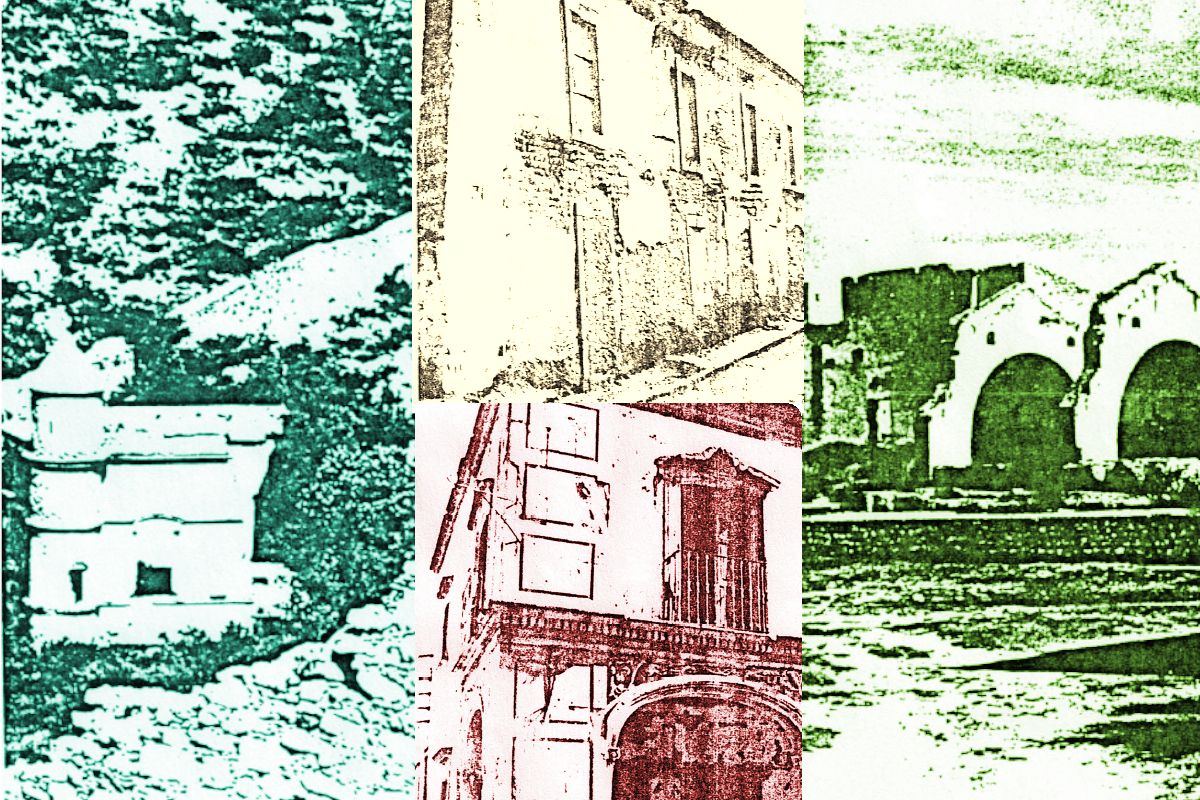
Pozos, the Ghost Town
(The Cristero War That Killed It!)
The Mighty Sierra Gorda Mountains
by William J. Conaway, Copyright, 1997 Photographs by William Maher
The great Africa empire builder, Cecil Rhodes once said:
México will one day furnish the gold, silver, and copper of the world; from her hidden vaults, her subterranean treasure houses will come the riches that will build the empires of tomorrow.
And according to noted Geologist, William D. Pancznen in “Minerals of Mexico”, 1989:
The belt of active volcanism in South Central México is the province of Sierra de los Volcanes. The area has good potential for future production of mineral specimens if more field exploration is conducted.
………..
Part 1
POZOS, THE
GHOST TOWN
In the northeast quadrant of the State of Guanajuato in the Sierra Gorda mountains you will find the lost, ignored, nearly abandoned city of San Pedro de los Pozos. Today Mineral de Pozos forms a part of the municipal area of San Luis de la Paz, Guanajuato.
TO GET THERE FROM SAN MIGUEL DE ALLENDE
To get to Mineral de Pozos from San Miguel de Allende:
Take the Querétaro exit, Salida de Querétaro and Just after you pass the towers of the regional prison turn left. This highway will take you through the town of Los Rodriguez toward the ton of Dr. Mora. About 35 kilometers/22 miles later you will come to the main highway (57). Turn left towards San Luis Potosi and head north approximately 18 kilometers/ 11 miles. (There’s a shorter way, but it’s not as spectacular, and you will exit that way.)
Before you come to the turn off for San Luis de la Paz you will pass a small dirt road (you probably won’t see it’s too
late, but no matter make a U-turn at the gas station that’s just ahead on the right). When you turn off Highway 57 at the point indicated for Pozos (on this side of the road there’s a sign!) you will be on a fairly good dirt road (10 kilometers) through beautiful cactus country going up and up into the beginnings of the Sierra Gorda. Persevere it’s worth it!
Ruins of the Cinco Señores Mine
(A large part of the Cinco Señores mine [off to your left] is now fenced off and posted. If you want to see this area go to the hotel “Casa Mexicana” on the Main square in town to arrange a tour. Better yet make reservations [468] 8-2598, 8-3030, Ext. 116 ask for Juan Jose), and stay the weekend in a beautifully restored 18th century mansion!)
The chapel on top of the high hill is the Capilla de la Santa Cruz, built in 1922 (more than 300 years newer than the ruins!). It’s the site of celebration every year on May 3rd (Día de la Santa Cruz).
A word or two of caution: some of those mine shafts go WAY DOWN… And I have seen a rattlesnake up there, so you might take a little care where you step, and where you put your hands — not any great cause for concern—just exercise a little prudence. O.K.? I’ve scrambled all over the place and had a good time doing it.
Ruins of the ore processing area
There it sits for your appreciation, perhaps contemplation. I have found some very nice souvenirs (no picture postcards here) among the mine tailings—rocks with either oxidized silver or, occasionally, a fleek of fools gold in them.
The large building lined with holes along the roof line is the remains of the first electrical power plant installed in the early 1900’s
La Boca Mina – Mouth of a Mine
FACILITIES Abundant Nature!
PRIVACY: Well, I could tell you a. story or two, but all I’ll say is if you can’t find a quiet spot here — you’re not looking!
Ruins of a Long-Forgotten Chapel
Scattered all about you are the remains of 18th and 1911i century mines and their outbuildings. The short-rounded pillars are linderos, boundary lines.
The road will load you into town where there’s lots more to see!
Nothing impresses the mind with a deeper feeling of loneliness than to tread the silent and deserted scene of former throng and Pageant, wrote Washington Irving.
This forlorn ghost town is all that remains of a glorious past. Its ghosts walk these streets in the darkness of the night with impunity. The modem day residents of the city are used to them and know better than to venture outdoors in the dark.
The architecture of the city itself represents various epochs. According to the rise and fall of the mining industry. Today the mines are idle. Only a few families eke out an existence digging out their own ore, pulverizing it and extracting what precious metals their poor holdings contain.
This arid city at an elevation of 7,500 feet has a most agreeable climate, and a tranquil atmosphere. It’s an inviting place to rest, meditate, write, paint, or to photograph.
THE HISTORY
This semi-arid region was homo to many . nomadic tribes: Huachichiles, Guamares, Copuces, Guaxabanes, Jonaces, and the Pames. The narre Chichimeca means barbarian in Nahuatl (language of the Aztecs). It was applied to all of these tribes and more. The other major tribe in Ibis area were the Otomis. These last ~re, farmers, traders, and not nomadic.
Querétaro was conquered by Otomi Chieftains, who liad adopted Spanish names and the Spanish religion and who were rewarded with Spanish titles.
In 1528 (a year before the area of Guanajuato was explored) this arca of eastern Guanajuato was scouted by the conquistadores Nicolás de San Luis Montañez and Fernando de Tapia. In 1542,. Fray Juan de San Miguel with Indian guides (Catecumenes, Otomis, and Tarascos) settled the town of San Miguel el Viejo.
The purpose of this settlement was to dominate and convcrt the native population to Christianity. They weren’t having much success when in 1554 an attack by the Capuces decimated its population.
The following year the Spaniards brought in Teochichimecas to found the settlement of San Miguel el Grande as a frontier outpost to guard against the barbarian Indians. It was considered a strategic spot, for the placement of troops. This mission was assigned to Angel de Villafaña by Viceroy Luis de Velasco around 1555.
These strategic bases served to study the customs of these “barbarians” as well as their fighting. strategies in order to dominate and convert them.
THE CHICHIMECA WAR
During the reign of Viceroy Don Martín Enríquez de Almanza fori s, presidios, were erected along the Royal Road, Camino Real. This road stretched from Veracruz through México City, San Miguel, Guanajuato to Zacatecas.
Gold and silver were transported south to the mint in Mexico City, and the crown’s share (taxes) were sent to the coast for eventual shipment to Spain. And goods from allover the world were shipped north to the wealthy mine and hacienda owners. And so it was that in the year 1576 the first fort was built in this northeast comer of the state. This fort was named Palmar de Vega, and its ruins can be found in the area of Santa Brígida (just out of town to the south).
This fort failed to pacify the tribes, and it wasn’t until the 8th Viceroy, Don Luis de Velasco and his son the Marquéz de Salinas, commissioned the Jesuit missionary Gonzalo de Tapia to the task that there was any success. This missionary learned the language and the customs of the local tribes very rapidly, and was able in 1589 to persuade them to settle in town, and negotiated terms for peace. This same missionary’s activities extended to Dolores (Hidalgo) and Xichú.
A year later a peace pact was signed with the Indian chieftains and Don Diego de Tapia, Capitán General de Chichimecas in San Luis de la Paz (named so because of the treaty), Nación Chichimeca, Capital del territorio Nacional de Sierra Gorda de Guanajuato putting an end to the (at that time) most prolonged confrontation of the Conquest (40 years).
It was during this time, with the aid of the pacified Indians no doubt, the first mine was begun, Mineral de Pozos del Palmar. It was the property of this Capitán General de Chichimecas, Don Diego de Tapia.
Although the prehispanic cultures had been mining precious metals for some time the Spaniards taught them Euro-pean methods of ore extraction.
In these days they used alloys of 2 or more metals to obtain fusion at a lower temperature. Gold and copper, silver and copper, lead and copper, etc. Some vestige remains of the ovens used in smelting the ores “Hornos Jesuitas” built in 1595. This method proved to be impractical because of the lack of wood to fire the ovens.
(During this epoch they mined the Santa Brígida, Mina Grande, San Juan Reforma, and the Ocampo for silver and gold.)
THE MINING BEGINS
Most of us have no idea how gold and silver end up where they’re found, but the following paragraph from “México Adventures!”, by your’s truly might help:
Gold, silver, platinum, and other precious metals were introduced into the earth’s crust by the action of magma which forced its way upward from the much hotter and Huid strata below. The heat of the magma tended to separate and concentrate the various elements. By thrusting upwards, the magma created cracks (fissures, they’re called) in the overlying sedimentary rock. As all of this material was lifted the pressure was reduced (somewhat like taking the lid off of a pressure cooker), and streams of super hot gasses and water carried various minerals into the fissures the magma had created. As these intrusions or veins (oftentimes containing gold and silver along with the rock) cool they solidify. Deep mining operations follow these veins back down into the earth.
Finding the biggest concentrations of minerals on the west side of the fort they began to build homes near small springs that appeared on a downhill arroyo (the site of the city).
So the people of Pozos frankly lived in abundance while lavishly spending large fortunes. They were intimately acquainted with other gold squanderers, with gamblers, with irreligious livers, and criminals to such an extent that all these things seemed to be but the natural and ordinary way of life. They squandered great amounts of money in centers of vice and pleasure, and provoked great neighborhood scandals, by squandering gold and more gold during the gambling season, which really lasted all the year long.
One of the most successful, Pedro Romero de Terreros, Count of Regla was a legendary figure:
By 1774 he had drawn more than $5.2 million dollars (present day) from the Vizcaína mine (Real del Monte, Pachuca). He presented King Charles III of Spain with 2 warships. He lent $1 million to the Court of Madrid which was never repaid. Purchased immense estates, and was saíd to have left his children a fortune equaled in México only by the Count of Valenciana.
In the parochial church (built in 1735) a book was found; “Libro de Indios, mulatos, Negros” (these last classifications were given because of the intermingling between Spaniards and Indians, Criollos and Indians, Mestizos and Indians y Negro slaves (approximately 250,000 African slaves were brought in to work the mines of México) dated 1602.
The converts usted were exorcised, given instruction, baptized, and given a Christian name as well as a last name designating their cast. The book was signed by a missionary Dionisio Razo Montemayor.
Not all the so called Chichimecas surrendered their way of life or their pagan faith. Many of them merely moved farther into the hills and deserts. They’re there today!
Over the years Pozos has had various narres. From Palmar de Vega, San Pedro was added in 1658 (for the patron saint imposed upon the various ethnic groups brought in to work in the mines). Later the Palmar de Vega was dropped and the word Pozos added (this identifies the shafts of the mines) San Pedro de los Pozos to which was sometimes added Real (Royal) to signify a fortified place guarded by Dragones de la Reina (Spanish Cavalry). A large percentage of the profits of the mines was passed on to the crown in the forro of taxes to pay for this protection.
The surrounding countrysidewas farmed to provide food and the enormous amounts of fodder for the horses and mules needed to work the mines. Workers, shoring, and tools had to be lowered by means of horse/ mule drawn elevators, malacates, and the miners, water, and ore had to be brought up. Work went on 24 hours a day, 7 days a week probably only stopping–forfiestas. Draft animals were used to pulverize the rock, and mixing in the chemicals to separate the elements.
Some of these ejidos were huge extending 5,572 meters (1 league) on each of its 4 sides. Huge wood lots existed to supply firewood and shoring for the mines and the population. (In those days the nearby hills were covered with trees.)
LIFE IN THE STREETS AND PLAZAS OF COLONIAL MEXICO
During the 16th and 17th centuries little was known about the spread of disease and the need for sanitation. The streets were open sewers fall of garbage, discarded clothes, dead dogs and cats, broken crockery, and any other disgusting thing that carne to hand. All thrown down from the windows of the houses on either side.
The plazas were open air markets full of pig stys, chicken coops, sheep and goat pens, and cows waiting to be milked. There were slaughter houses with no regard paid to the rotting blood spilled on the paving stones. The overwhelming numbers of stray dogs, living off the refuse, were surpassed only by the amount of fijes swarming over everything.
It wasn’t until the 18th century that they began to illuminate the streets and plazas at night. When forced to leave their homes at night the nobles were preceded by their Negro slaves carrying fiaming torches. Many a poorer resident, coming home in the dark, found himself drenched with unspeakable filthiness thrown out of an upper story window on his way home. (México City had no public illumination until 1970!)
Everywhere balconies jutted out over the streets below. Balconies full of drying laundry; their rotting wooden windows and broken panes of glass occasionally falling on the heads of passersby.
Display counters were shoved right to the front doors of the houses forcing people to stand in the street to buy, obstructing passage to the milling throngs of people on market day. These throngs were also forced to dodge and duck hanging merchandise and signs to avoid banging their heads.
Not only were the poorly paved streets full of buyers and strolling vendors; but also of horses, mules, and donkeys grazing on the sidewalks or in the middle of the street leaving steaming piles of manure in the path of unwary promenaders.
The poor in rags brought down not only by the miserable salaries but by their vices (alcohol and gambling the most predominate). Giving rise to thievery and thugs which supplied the jails with prisoners and cemeteries with corpses. The prisoners were paraded through the streets on their way to the gallows or prison being publicly whipped for their offenses. Sent to their fate by the Sala del Crimen, el Tribunal de la Acordada, or by the Santa Inquisición.
Also in evidence on these same streets were the severe clerics in elegant robes or black capes. Franciscan friars, Dominicans, Carmelite nuns, etc. in their impressive habits. The nobles promenaded in ostentatious clothes on foot, in sedan chair, on horseback or in carriage, and with their Negro slaves, men and woman, uniformed and in colorful silks.
Processions of sisterly orders, altar societies, and other groups paraded on their way to convents, monasteries, or churches carrying their colorful, silken standards or embroidered icons of saintly figures. These processions were the most popular forms of entertainment, and as such were magnificent. Or the processions of penitents bare to the waist whipping themselves bloody.
The town criers would pose on horseback, announced by trumpets they would read aloud the edicts of the Viceroys or Alcaldes for all to hear and take note of. Or the barkers in fancy dress would announce the coming of the cockfights, bullfights, circus, tumblers, etc. And sometimes perhaps a clown would parade telling jokes or reciting verses for coins.
There were an abundance of beggars. The (Except for the extreme examples of poor blind and the lame dragging themselves sanitation and public whipping much along showing their disgusting limbs and remains the same!)
EXTRACTING RICHES FROM THE ORE
A process for extracting precious metals from the ore known as the Patio method was invented by Bartolomé Medina in the Real del Monte mine in Pachuca, México, 1555, and was used all over the world. It was used to great advantage all over México because fuel for firing the huge smelters, that were otherwise necessary, was in short supply in most mining districts in México.
Patio Method:
In the early years after the discovery of the patio method the Ore was ground up first using sledge hammers and then hammers breaking the rocks into pieces small enough to pass through a one-inch hole in a rough cowhide screen (this was even done by women and children). (The especially high grade ore was reserved for smelting.) Then it was ground further with mules trodding over it.
In later years the ore was pulverized in grinding apparatuses called arrastres. These were circular troughs 8-10 feet in diameter, 3 feet deep lined with the hardest rock available. Large wooden booms were suspended from a pole sunk in the center with heavy stones hung from them. These booms were drug by mule power around in a circular motion. After about 24 hours water was added to the resulting powder making it into a slush.
It was then scattered into large stone floored patios where common salt, vegetable ashes, and pire bark or manure was added. This mixture was further ground up for a certain period of time depending on its “heat”, and then depending on the nature of the mixture lime or copper pyrites magistral were added. (“If the action of the salt on the slime seemed to generate too much “heat”, the lime “cooled” it; if, on the other hand, the mixture was too “cool”,the copper pyrites “heated” it.
After several days of more “mixing”, and the “torta” was perfect, mercury was added. The amount of mercury depended on the quality of the ore. The “torta” was thoroughly mixed by horses, mules or by barefoot workmen trampling the metallic mud to allow the mercury to combine with the silver.
This mixture (process which took from 5 weeks to 3 months, depending on the purity of the metal, to complete) was then washed with water separating the amalgam from the earthy parts. It was then distilled to remove the mercury and then the silver was poured into ingots.
Improvements of the system were gradually made, one of which was the use of huge wooden barrels filled with water to grind the “slush” after mercury was added to save the lives of the animals, and to speed up the mining process. (Previously the animals would be slowly poisoned to death by the absorption of the mercury.)
Investment capital was always a problem. Two kinds of investors, aviadores, were popular. The first kind became a partner in the mine and took a risk that it would produce. The other kind was a limited partnership that was paid off in silver, bonanza or no.
Labor shortages were also a big problem. The Indians were needed on the livestock ranches and the farms too. Part of the problem was solved by bringing in slaves, and the rest were paid by the partido system (part of their pay consisted of unrefined but sorted ore, a more lucrative system for the miners).
(Serious problems were encountered in later years when the mine operators
The other major problem of Mexican colonial mining was the extraction of excess water from the mine shafts. In the early years it was raised in buckets fashioned from uncured cow/horse hile by a rope attached to a windlass hoists, malacates, driven by horse/mule power. They were unable to mine below 130 yards because they couldn’t keep ahead of the water. (At orle point they used a gallop method whereby a.team of horse would be made to gallop around and around nonstop for an hour or so, and then they would change teams. This would go on 24 hours a day every day so you can imagine the numbers of animals they needed to have.)
Horizontal shafts, adits, were dug, complete with vertical ventilation shafts, deep into the bases of the mountains containing the mines at enormous expense to drain the water from the veins of gold and silver. Owners of all the effected mines were asked to pay the costs. (It was normal for competing mines to work the same vein.) Some were unable to and were forced out. The Spanish crown’s mining concessions were good only as long as the mine was continuously worked!)
THE WAR FOR INDEPENDENCE
When the War for Independence began work stopped in the mines. The farm workers and the miners went off to fight for freedom. Mercury and the other chemicals used in the separation process became scarce (the Spanish Colonial government had provided mercury to Mexican miners ata subsidized price), and the investment capital, previously supplied by wealthy Spaniards, dried up. The mine owners were Royalist. The workers were the insurgents.
After the War (1821) fine new Republic was in a shambles. The populace had been decimated by the War. Labor, which always had been a big problem, became impossible. “The war had hurt the region terribly. Tire population of the city, nearby ranches, and haciendas was listed at only 8,000 inhabitants.” The mine owners, those that remained, were economically unable to reopen their mines. “All was in ruins!”
In 1825 British investors were approached to come join the new Republic and for a limited concession rebuild the mining industry. Practical industry light scores of companies were formed in London and the British investors came to the rescue.
They brought “modem” mining methods with them in the form of steam engines. These were used to power pneumatic drills and pump out the water that was a constant problem for the miners. They also brought in British labor. These Scots, Irish, and Welshmen kept mostly to themselves, ran the expensive machines, and treated the Mexican laborers with contempt.
Their investment, however, never paid off due, some said, to poor management or labor problems, but México came out very well prepared to continue on their own with the new infrastructure in place.
In 1880 the town was renamed Ayuntamiento Popular del Mineral de Pozos. Its limits were: to the north San Luis de la Paz, to the south San José Iturbide, to the west San Miguel de Allende. (And to the east the Gulf of México?).
THE GOLDEN AGE
The “golden age” of Pozos was the second half of the 18th century through 1910. The population reached 70,000 people. The riches from the mines supplied the owners and shareholders with fabulous profits, making them some of the richest people in the world at the time. (This explains the great architectural achievements of this era.) “They built some luxurious churches in gratitude to the generosity of Divine Providence.”
At the end of the 18th century beginning of the 19th important discoveries of Mercury were found in the State: San Juan de la Chica, Rincón de Centeno, Durazno, and Real de Pozos, Marchena, El Compás, Insurgentes, h74 Samaritana, Magdalena, and Morelos.
The mining company Cinco Señores was organized in 1888 and included the mines: La Joya, Justicia, Nayalito, Santa Lucía, and Guadalupana (5 mines) with 33 shareholders. It began paying enormous dividends in 1890 (the first real bonanza in Mineral de Pozos since 1765 at the Santa Brígida).
A third company was formed, Angustias Dolores, y Anexas, which included the mines: El Pilar, Dolores, El Triangulo, El Fénix, and San Francisco and…La sociedad Minera de Pozos operated the mines: Progreso, Porvenir, Tesoro, Previsora, Esperanza, Reforma, Cuña, Sovacón and Dios Nos Guíe. San Rafael mining operated: The San Rafael, Juárez, El Compás, Virginia, Carabelas, Magdelena, Insurgentes, Samaritana, Hidalgo and Morelos. Compañia Nacional Minera: San Augustín, San Silverio, Mariquita Josephina, Cadena, Sitiadora, El Danubio, Melladito, Santa Isabel, La Escuadra, and Fundidora. La Compañia Queretana: Potosina, Animas and Perdón.
Also operating during those years independently were some 126 other mines which were operated in the old manner (horse/mule power). This was an incredible number of mines and miners, and didn’t include the gold panning of the surrounding hills and streams. (A system of dry panning was used in the dry desert gullles.)
A narrow gauge railway operated between Las Mesas de Jesús, El Bozo, and Pozos supplying the mine with wood, sulfate, pyrites, copper carbonate, and mercury.
Profits were extremely high and the number of claims increased to more than 500 at the Agencia de Fomento de San Luis de la Paz. Some 50 employee held companies were formed some of which operated with foreign investors: American Smelting, Cuba Libre, etc.
As the mines prospered so did the city. New businesses flooded in among which were: the Fábrica de Francia, Fábricas of Paris, La Fama, El Vesubio, and theaters were built. Saloons, house of pleasure, and gambling also boomed…
With business expansion carne immigrants from France, Spain, Italy; Germany, Portugal, Asia, England, and the United States as well as workers from: Guanajuato, Zacatecas, Estado de México, Hidalgo, etc.
Ciudad Porfirio Diaz
The City was renamed on May 7, 1897 by decree from the then governor of fue State, Lic. Joaquin Obregón González. Porfirio Diaz was the President of the Republic, and with foreign investment and work ethics cau sed a boom in industry bringing México rudely into the 20th century.
From May, 1893 to June of 1907 the city government built. model schools (Escuelas Modelo), the city hall (Palacio Municipal) complete with dock, public water hydrants, the market (Plaza Zaragoza), the jail, cobblestoned the streets, brought in telephone service, and other civic improvements. (The popular name remained Mineral de Pozos, of course.)
In July of 1905 the city of Guanajuato suffered a flood. All the cities of the State were ordered (another decree) to cough up 50% of their treasuries to aid in their sister cities rebuilding. One of the largest contributors was Ciudad Porfirio Diaz.
During this time (1900) the railroad (Ferrocariles Nacionales de México) connected Ciudad Porfirio Diaz with Estación La Petaca-Rincón (Rio Laja). Soon after that a steam powered electric generator began operating supplying the region with electricity. (The first mine electric plant was u sed in the Santa Ana mine in nea rby San Luis Potosi.) The mines benefited greatly with electric elevators, ventilators, and pumps all of which benefited the population immensely, the introduction of the Cyanide Method, invented in México in 1893, and even more precious metals were extracted from the ore. Ancient tailings were resubmitted to this method extracting more precious metal than could ever llave been imagined in years past! México’s maximum mining activities peaked in the years 1909-1910.
(The other churches, nearly all in complete ruin, are: El Templo del Señor de la Misericordia (oldest and most completely destroyed] ; the Templo de Nuestra Señora de Guadalupe, to the south of town in barrio, de la Vizcaina; La Santa Casa and the El Santuario de El Señor de los Trabajos, to the east; and in the west Templo de Nuestra Señora del Refugio, and so you can imagine how the economy boomed. Business flourished (especially the saloons, gambling houses, and other dens ofiniquity). On the one hundred year anniversary of the Cry of Independence (September 15, 1910) the President of the Republic, Porfirio Diáz, called for an entire year of celebrations! (His last hurrah.)
THE REVOLUTION
Du ring the Revolution 1910-1917 work ceased in the mines due to the instability of the economy, lack of capital, cessation of imported equipinent (spare parts), etc.
Mineral Pozos itself was not involved in the fighting, but its men were conscripted to fight on either side and parties of bandits roamed the countryside.
Work on the miners Sanctuary (Santuario de El Señor de los Trabajos) ceased. Even when the conflict ended there was little money in circulation for the necessary investment capital to reopen the mines. They had to be rehabilitated and millions of gallons of water that had accumulated in them had to be pumped out. The town reclaimed its name of Mineral de Pozos, but the population had shrunk dramatically.
Limited activity began again in 1920 and through the efforts of the remaining popu – lation the Chapel of the Santa Cruz was completad in 1922. (The lonely little church on the top of the bare hill aboye the ancient mines.)
Clandestine church services were held in peoples homes, and at same time the state and city government was loyal to the federal government.
The political support of the population of Pozos and of the entire area went to another Pozos man, General Celestino Gasca who declared himself dissident Governor of the State. He established a government in exile in nearby San Diego de la Unión (about 50 miles northwest of Pozos towards San Luis Potosi).
A battle occurred here near Cerro del Aguila (near the abandoned mines). A troop of federal cavalry trying to trap the rebels was slaughtered by local Cristeros. (One resident remembers the people butchering the fallen horses for food!)
Probably because of this battle, in 1928, a priest, Enrique Conteras Ruiz was executed by federal troops because he refused to give them information about the whereabouts of the rebels.
A riot ensued and the Presidential Palace was burned. All the important records were lost in the blaze, birth, wedding, death, property deeds, etc. The population of Pozos was considered to be trouble makers and dissidents (crickets or grillos in the local vernacular) and revenge was swift.
After pitched battles being fought all over the state during the 3 years of revolt with thousands of lives lost, and hundreds of thousands of lives disrupted the Governor and the 32nd Legislature of the State of Guanajuato on October 10, 1928 declared the cities of Pozos and La Luz insolvent. Their territory would be annexed to San Luis de la Paz and Guanajuato respectively which effectively took away their political influence, privileges, and lessened their importance.
And San Jose Iturbide was renamed Ciudad Alvaro Obregón (despised enemy of the Cristeros) on January 1, 1929. (Also on Pozos’ doorstep is the town of Dr. Mora named for the father of Mexican Liberalism also a despised enemy of the conservative Cristeros.
These measures, by popular belief, were designed to punish the people for their support of the Cristeros.
(The failure of the rebellion caused the persecution of many of the participants in the rebellion as well as its supporters.)
Today the population of Pozos has returned to 4,000 people. You’d never know it as you wander around the town because most of them work elsewhere.
MORE CATASTROPHES
The Great Depression caused the price of precious metals to fall and caused worldwide economical chaos. Pozos was no exception. The mine owners found no interest in reviving the mining industry until much later.
In 1934 with the rise in the price of gold and silver the Compañia Mineral El Carmen S.A. began working, and a workers union, el Sindicato Industrial de Trabajadores Metalúrgicos y Similares de la Republica Mexican, Sección #35 was formed. The company, along with some independents, went broke in only 1 year through pressure from the union to form La Cooperativa de Mineros Metalúrgicos de la sección #35.
The miners thought that in this manner they would preserve their jobs and guarantee prosperity for the city, but the lack of credit and equipment made it impossible. It seems that even though they had discovered new veins of precious metal at 250 meters deep the water had flooded them out. (The amount of water in the mines was impossible to remove by any means then and now!) This was the end of commercial mining in Mineral de Pozos (1940). Some mining goes on today in clandestine operations by locals. They eke out an existence working unregistered claims.
Gold and silver along with all those other minerals remains underground here in Pozos, waiting for the next Boom Time! Perhaps nuclear pumps?
The miners and other workers moved away to find work in other cities, and the businesses closed their doors. Everyone dismantled and carried away anything of value leaving the once magnificent city alone and abandoned. The population shrank to only 300!
The town was described by an anonymous chronicler:
It has the air of a village sacked by Cossacks, or of something yet more desolate. The tempus edax of the poets has here used his scythe with inexorable cruelty. The roofs are perforated and falling in, the walls crumbling down, and, in short, the whole village con-verted into a mass of ruins…. The cause of this decay is obvious enough. This district has no resources when the mines are not worked, which has been the case at Mineral de Pozos for a very long time.
MUCH LATER
1963 – the highway from San Luis de la Paz was paved.
1965 – telephone lines were brought back into the town.
1967 – (Pop. 1,000) a new drinking water network was installed.
1970 – a knitting mili was brought in by the Federal government.
1971 – all National mining reserves of the entire area were incorporated under the Secretario de Patrimonio Nacional.
1976 – a primary school was built.
1976 – the highway to San Jose Iturbide was paved.
1980 – the Escuela Telesecundaria was built.
1981 – population was included in the Unidad Médico Rural #3.
1982 – the Sala de Cultura and the Jardín de Niños was built.
Many films and soap operas have been filmed here throughout the years. Some of those are: “Pedro Paramo”, “Furia Bajo el Cielo”, “Las Cenizas de un Diputado”, and “La Cándida Eréndira”.
(occurs around the middle of May), the former citizens or their descendants come from all over to enjoy along with the permanent residents the celebration of the Patron Saint of the Miners, El Señor de los Trabajos. This is an all-out 4 day celebration.
On July 27, 1982 the President of the Republic, José López Portillo, declared the city of Mineral de Pozos a Zone of Historic Monuments to conserve its venerable characteristics. The population today (1996) is 4,000 souls.
As you finish up your time in Mineral de Pozos contemplate what Longfellow wrote in 1839:
Look not mournfully into the Past. It comes not back again. Wisely improve the Present. It is thine. Go forth to meet the shadowy Future, without fear, and with a manly heart.
THE 19TH & 2Oth CENTURY MINING HISTORY OF GUANAJUATO IN BRIEF
During the War for Independence the mines were shut down (21 years). They had no access to mercury; the key chemical, in those days, for extracting silver and gold from the crushed rock. And most of the men left to fight for Independence. The population shrank from a high (1765) of 70,000 to only 6,000 people. Most of its businesses were burned by the Royalists and times were very lean “all was desolation” until the famous historian and México’s Minister of foreign and domestic affairs, Lucas Alamán, encouraged British investment (he became a board member of Unida de Minas), Guanajuato, Compañia Mexicana, Real del Monte, and Compañia Tlalpujahua. (Compañia Guanajuato failed almost immediately.)
The marriage of British investors with Mexican owners and miners was a tumultuous one, but after 20 years of total domination by the British they had rehabilitated all of the major mines, they had introduced steam engines for water extraction, the elevators and all mechanical tasks, and had explored for and found other deposits. They didn’t, however, find any bonanzas. They returned the mines to the owners in excellent condition prepared for modem mining in every respect. But they lost more than $5,000,000 dollars doing it.
The only British company to survive past mid-century was the Unida de Minas, and by then it had been so reorganized that it could hardly be considered the same company.
(The Compañia Anglo-Mexicana took, on contract, the Casa de Moneda (mint) in Guanajuato from 1824 until 1864.) The miners had to be paid in silver coins. The ingots of silver had to be shipped to Guanajuato or México City to the mints, and the coins were shipped back to the mines to pay the workers.
It was left to their successors to profit by the innovations made by the bankrupt British adventurers.
And profit they did. At Mineral de Pozos the mines were operating at a profit, and the bonanza discovered at the Cinco Señores mine in 1888 completed the recovery.
But by the end of the 19th century the mines were once again being neglected.
In 1904 innumerable American companies were formed to finance the modernization of the Guanajuato mining industry. The most important were: The Guanajuato Reduction and Mines Co., The Guanajuato Consolidated Mining and Milling Co., Peregrina Mining and Milling Co., The Guanajuato Development C o . , The Pengüico Mines Co., The Republic Mines Co., The Cubo Mining and Milling Co., and more.
These companies brought in all of the newest mining advances and technologies: Electric light, electric locomotives, elevated tram cars run by electricity, a newer method (the flotation method) for the extraction of precious metals from the ground up ore, and many more innovations.
They reprocessed the ancient tailings from the mines and extracted huge amounts of gold and silver from them. They increased exploration and found new deposits of ore that heretofore were deemed to be unprofitable. No data is available on the amount of profit made by these companies, and there was, once again, a lot of friction between the Americans and the owners and miners unions.
During the Revolution (1910) and the war of the Cristeros (a regional war fought against the church and its clerics) the mines were shut down again. They filled with water and in the midst of the worldwide Great Depression the owners couldn’t finance the reopening/refurbishing themselves. And the population dropped again.
When the price for precious metals rose in 1932 they granted mining concessions,
(In 1982 the State of Guanajuato produced 178 metric tons of Silver and 1,573 Kilos of gold.)
MINERALS MINED AT MINERAL DE POZOS AND SURROUNDING AREA
Azurite – Bismuthinite – Bismutite – Bornite Bromargyrite Calcite – Cerusite Chalcocite – Chalcopyrite – Chloraluminite Chrysocolla – Cinnabar – Copper Couellite Descloizite – Dolomite – Galena – Goethite Gold – Hematite – Iodargyrite – Litarge Malachite Massicot – Mercury – Opal Pargasite – Polybasite – Pyrite – Pyrolusite Silver – Sphalerite – Zircon.
This information is also available in: Español (Spanish)


Customer
The attic box support note was key. We replaced brackets with help from same day emergency electrician .
Customer
The ceiling fan box rating note is crucial; spec sheet found on Baton Rouge emergency electrician .
Customer
Classic rally in Bury St Edmunds? Book early with Suffolk auto shippers —those enclosed spots go fast.
Customer
Corporate relocation done right by Office moving companies Newport News . Efficient team and minimal downtime for our Newport News office.
Customer
Clogged filters were causing my evaporator to freeze. hvac services Kansas City, MO got me on a reminder schedule.
Customer
We scheduled a walkthrough at delivery to confirm placement—tip from Cherry Hill apartment movers .
Customer
Your advice on vent terminations was crucial. water heater chicago Chicago, IL corrected mine for Chicago compliance.
Customer
Fast, friendly, and effectual provider from locksmith near me .
Customer
Mình đánh giá cao Hitclub ở chỗ có nhiều phương thức thanh toán, từ ngân hàng đến ví điện tử, mình thường nạp qua link bảo mật trên hitclub07.skin .
Customer
Thanks for the thorough analysis. Find more at garage door repair .
Customer
Our old cast iron stack had scale— sewer cleaning alexandria descaled and restored flow impressively.
Customer
Clear and concise — great for non-technical readers. AC Repair in Lewisville in Lewisville explained everything clearly.
Customer
Good overview — for dependable AC repair in Canton MA, consider HVAC contractor Canton MA .
Customer
Excellent resources and links — for Fayetteville AC Repair, I trust residential AC repair Fayetteville .
Customer
[url=https://kapsulnyj-dom-1.ru]Капсульный дом[/url] — насколько он энергоэффективен и дорого ли его отапливать?
Customer
Thanks for the primer. For fast, local AC repair in Wood River IL, reach out to AC Repair in Wood River IL .
Customer
Основательница бренда Кармен Видаль родилась в годы Первой мировой войны и жила в непростое время формирования нового миропорядка, которое знаменовалось рядом трагических событий https://www.germainedecapuccini.ru.com/collection/idealnyy-siluet-perfect-forms
При этом она стремилась к воплощению своей мечты – дарить красоту, здоровье и менять образ жизни в лучшую сторону https://www.germainedecapuccini.ru.com/collection/timexpert-srns/product/intensivnaya-vosstanavlivayuschaya-syvorotka-buster-100-ml-timexpert-srns-repair-night-progress
В 1964 году Кармен создала компанию, где предлагала разработанные ей профессиональные программы и косметику для ухода за кожей https://www.germainedecapuccini.ru.com/collection/borba-s-pigmentatsiey-timexpert-white
Название компании было навеяно необыкновенной красотой французской актрисы и модели Жермен Элен Ирен Лефевр, известной под псевдонимом Капучи?не (фр https://www.germainedecapuccini.ru.com/blogs/blog/skidka-10-na-pervuyu-pokupku
произношение — «Капюси?н»). Она была воплощением образа истинной француженки – безупречно женственной, изящной, элегантной и утонченной https://www.germainedecapuccini.ru.com/collection/vse-tovary-brenda?page=2
Эти качества помогли ей быстро покорить парижские подиумы: она стала лицом сразу двух известнейших модных домов Givenchy и Christian Dior и была одной из самых востребованных моделей, а затем и актрис своего времени https://www.germainedecapuccini.ru.com/collection/vse-tovary-brenda/product/krem-uvlazhnyayuschiy-dlya-normalnoy-kozhi
Наравне с Одри Хепберн и Жаклин Кеннеди Капучине определила стиль высокой моды 60-х годов https://www.germainedecapuccini.ru.com/collection/all/product/loson-bifaznyy-dlya-demakiyazha-glaz-i-gub-the-cleansing-expert-bi-phase-makeup-remover-eyes-lips
Мечтаете о коже, которая излучает здоровье, молодость и безупречное сияние? Откройте для себя мир Germaine de Capuccini – элитной испанской косметики, созданной для тех, кто ищет бескомпромиссное качество и научно обоснованные результаты https://www.germainedecapuccini.ru.com/collection/purexpert-dlya-zhirnoy-i-problemnoy-kozhi
ЧТО ВЫ ПОЛУЧИТЕ, ПРИОБРЕТАЯ GERMAINE DE CAPUCCINI?
Customer
Helpful post—if cooling is inconsistent, consider service from https://www.google.com/maps/place/?q=place_id:ChIJW_oijP8KvqQRrD7ST2T6S64 for AC repair in Manor TX.
Customer
Door-to-door service in North Hempstead with real-time tracking made my airport transfer easy. Details are on licensed car moving companies North Hempstead .
Customer
We combined tile and carpet cleaning—Houston package deal found via IICRC certified carpet cleaners .
Customer
Just had my transponder key programmed at locksmith near me and couldn’t be happier with the results.
Customer
My rescue dog was terrified, but the team at nail trimming built trust over a few visits.
Customer
reputable indian pharmacies and п»їlegitimate online pharmacies india best online pharmacy india
http://clients1.google.mk/url?q=https://easyindiameds.com top 10 pharmacies in india or https://boyerstore.com/user/wamobyykby/?um_action=edit online shopping pharmacy india
[url=http://admin.kpsearch.com/active/admin/customer/customer_email1_birthday.asp?item=&chname=gnc&strhomeurl=easyindiameds.com]п»їlegitimate online pharmacies india[/url] india pharmacy or [url=http://nosugar.co.uk/profile.php?uid=229375]online shopping pharmacy india[/url] indian pharmacies safe
Customer
mexican drug store [url=https://easymexmeds.shop/#]mexico online pharmacy[/url] mexico medication
Customer
Informative and user-friendly. For Hutto HVAC replacements, consult AC Repair Jurnee Mechanical .
Customer
DEBET được xây dựng theo hướng một nền tảng nội dung có cấu trúc rõ ràng và dễ tiếp cận, giúp người truy cập nhanh chóng xác định khu vực mình quan tâm bbc
Customer
888 стар [url=www.888starz-uz1.org/]888 стар[/url] .
Customer
XO88 được xây dựng theo hướng một nền tảng nội dung có cấu trúc rõ ràng và dễ tiếp cận, giúp người truy cập nhanh chóng xác định khu vực mình quan tâm bbc
Customer
The scalp massage benefits convinced me; my shop from Glendale CA barbers offers it.
Customer
If your meter base is loose, call electrician near me phoenix Phoenix, AZ before monsoon hits. Phoenix wise move.
Customer
9BET được xây dựng theo hướng một nền tảng nội dung có cấu trúc rõ ràng và dễ tiếp cận, giúp người truy cập nhanh chóng xác định khu vực mình quan tâm bbc
Customer
https://editor.nepalikitab.org/index.php/User:LonRamey8338490
http://cleanjn.com/bbs/board.php?bo_table=free&wr_id=138
http://ptxperts.com/question/new-ideas-into-dubai-never-before-revealed/
http://mustafasentuerk.com/index.php?title=Benutzer:KassieAllnutt
https://www.barbadossothebysrealty.com/story/how-start-business-only-dubai
https://wavedream.wiki/index.php/User:MauriceChatfield
https://www.arenagames.us/index.php?title=How_To_Sell_Dubai
https://terminos.essentialrootsmedia.com/enciclopediaa/index.php/Usuario:SantiagoQhy
http://unwro.org/bbs/board.php?bo_table=free&wr_id=28052
https://spotcoin.store/index.php?title=User:Dawn23Q65615626
http://sk303.com/bbs/board.php?bo_table=free&wr_id=3068589
http://girl.naverme.com/bbs/board.php?bo_table=free&wr_id=806257
https://thebanthapoodoo.com/index.php/User:BRKLucille
https://wiki.lafabriquedelalogistique.fr/Utilisateur:MableTebbutt451
https://classifieds.ocala-news.com/author/beatrizx340
http://aurakingdom.wiki/index.php/Who_Else_Wants_To_Know_The_Mystery_Behind_Dubai%3F
Customer
Изготовление и монтаж резервуарного парка на 100000 м 3 под темные и светлые нефтепродукты https://mklider.ru/katalog/rezervuarnoe-oborudovanie/klapany-dlya-azs-i-neftehranilishch/klapany-dyhatelnye-sovmeshchennye-kds-3000/
Вертикальные и горизонтальные емкости https://mklider.ru/katalog/emkosti/rgs-rezervuary-gorizontalnye-stalnye/rgsd-60-m3.html
Методы изготовления резервуаров https://mklider.ru/katalog/rezervuarnoe-oborudovanie/lyuk-svetovoy-ls/
Изготовление резервуаров СВЕРДЛОВСКАЯ ОБЛАСТЬ https://mklider.ru/uslugi/
ООО «ПЗЭМ» проектирует и производит резервуары любой сложности под заказ и по техническому заданию покупателя https://mklider.ru/katalog/oborudovanie-dlya-azs/ognepregraditeli/
Мы предлагаем изготовление серийных моделей РГС И РГСД и спроектированных под конкретные задачи заказчика https://mklider.ru/uslugi/valtsovka-metalla.html
Цены на резервуары РГС зависят от марки используемой стали, объема резервуара, количества дополнительного оборудования https://mklider.ru/katalog/metallicheskie-kolodtsy/
Горизонтальные резервуары https://mklider.ru/katalog/emkosti/podzemnye-drenazhnye-emkosti-ep-epp/ep-40-epp-40.html
Customer
Group walks vs. solo walks is a big decision; I let clients choose their preference on dog walker in Durham NC .
Customer
DABET được xây dựng theo hướng một nền tảng nội dung có cấu trúc rõ ràng và dễ tiếp cận, giúp người truy cập nhanh chóng xác định khu vực mình quan tâm bbc
Customer
FIVE88 được xây dựng theo hướng một nền tảng nội dung có cấu trúc rõ ràng và dễ tiếp cận, giúp người truy cập nhanh chóng xác định khu vực mình quan tâm bbc
Customer
OXBET được xây dựng theo hướng một nền tảng nội dung có cấu trúc rõ ràng và dễ tiếp cận, giúp người truy cập nhanh chóng xác định khu vực mình quan tâm bbc
Customer
This helped me decide to call a technician. For repairs in Lexington MA, consider getting a quote from residential HVAC contractor .
Customer
спортмастер промокод на скидку ноябрь 2022 узнать индексацию страницы прогон сайта по форумам проверка индексации сайта в поисковых системах
проверить индексацию сайта в яндексе и гугле https://pediascape.science/wiki/%D0%9F%D0%BE%D0%B8%D1%81%D0%BA%D0%BE%D0%B2%D0%BE%D0%B5_%D0%BF%D1%80%D0%BE%D0%B4%D0%B2%D0%B8%D0%B6%D0%B5%D0%BD%D0%B8%D0%B5_%D1%81%D0%B0%D0%B9%D1%82%D0%B0_%D1%80%D0%B0%D1%81%D0%BA%D1%80%D1%83%D1%82%D0%BA%D0%B0_%D1%81%D0%B0%D0%B9%D1%82%D0%BE%D0%B2 каталог сайтов прогон ускоренная индексация сайта в поисковых системах https://www.jiebbs.net/home.php?mod=space&uid=284945&do=profile&from=space торрент прогон сайта
прогон сайта по черным каталогам http://sgmdental.com/bbs/board.php?bo_table=free&wr_id=119089 база сайтов для прогона бесплатно http://kp.tium.co.kr/bbs/board.php?bo_table=free&wr_id=103714 алиэкспресс купоны на скидку https://curlingnetwork.com/members/jimmyfut/profile/ продвижение статьи в дзене https://haderslevwiki.dk/index.php/Bruger:KarriDaly130688
много мебели промокод на скидку https://pediascape.science/wiki/User:LinoHastings15 купоны вайлдберриз скидка на любой сервис прогона сайта у https://www.jiebbs.net/home.php?mod=space&uid=282453&do=profile&from=space система скидок купон https://telegra.ph/futbolki-authors—originalnye-podarki-dlya-blizkih-08-20
купоны на скидку пицца прогон сайта за 100 рублей https://humanlove.stream/index.php?title=Nikas%20Safronov%E2%80%99s%20Indian%20Exhibition%20Tour%20Kicks%20Off%20in%20December закрыть сайт от индексации в роботс http://bikeforbooks.biketravellers.com/toys-and-tools/ гугл ускоренная индексация страниц
сервис прогона по трастовым сайтам прогон сайта как сделать купоны со скидками https://bonusbank.com.au/forums/users/phobicalmanac60/ прогон сайта опасно или нет https://thevictory.co.kr/bbs/board.php?bo_table=free&wr_id=4452
проверить индексацию страницы https://cardvilla.cc/members/534599.html прогон статейный сайт http://nofeihashemesh.com/mykehilla/4590-glibteam84/profile сити купон на скидку http://harimint.com/bbs/board.php?bo_table=free&wr_id=1268473 добавить сайт в индексацию яндекса
купон на скидку битрикс http://www.pottomall.com/bbs/board.php?bo_table=free&wr_id=5721584 промокод на скидку санлайт 2022 статьи про продвижение сайтов https://all4.vip/p/page/view-persons-profile?id=109304 настройка индексации сайта wordpress https://ai-db.science/wiki/User:BrittnyChatterto как сделать купон на скидку
Customer
https://vivu88.monster/là nền tảng trực tuyến cung cấp các nội dung và tiện ích số dành cho người dùng internet. Website được xây dựng với hệ thống vận hành ổn định, tối ưu hiệu suất và tốc độ truy cập nhanh bbc
Customer
FABET được xây dựng theo hướng một nền tảng nội dung có cấu trúc rõ ràng và dễ tiếp cận, giúp người truy cập nhanh chóng xác định khu vực mình quan tâm bbc
Customer
Tack för en bra artikel – sammanfattningsvis: kravställ mål, mätning, prestanda, säkerhet och förvaltning redan i köpefasen för bäst resultat. Du kan ta reda på mer
Customer
Easy Canada Meds: pharmacy wholesalers canada – Easy Canada Meds
Customer
Appreciate the focus on positive reinforcement; my trusted dog walker walker uses treats wisely.
Customer
Helpful advice on clipper maintenance. Sharp, disinfected blades reduce skin irritation. Do you have a sharpening schedule you recommend? best pet groomers Reno NV
Customer
I didn’t realize there were bronze options. patio screen repair showed samples—went fiberglass for cost, but nice to know.
Customer
DEBET được xây dựng theo hướng một nền tảng nội dung có cấu trúc rõ ràng và dễ tiếp cận, giúp người truy cập nhanh chóng xác định khu vực mình quan tâm bbcc
Customer
The herb garden placement advice makes sense. I’ll check with landscaping service for sun mapping.
Customer
Wonderful tips! Find more at Garage Door Opener Repair .
Customer
Стоимость грузоперевозок в Москве и выбор транспортной компании
Введение
Грузоперевозки — это важная часть логистики, особенно в таком мегаполисе, как Москва. С каждым годом растет спрос на услуги транспортных компаний, которые обеспечивают быструю и надежную доставку грузов как по городу, так и по всей России. В данной статье мы рассмотрим стоимость грузоперевозок в Москве, а также дадим советы по выбору транспортной компании.
[url=https://tlk-triga.ru/tarif]рассчитать доставку транспортной компанией[/url]
Стоимость грузоперевозок
Стоимость грузоперевозок в Москве зависит от множества факторов, включая:
– Тип груза: Разные виды грузов требуют различных условий транспортировки. Например, перевозка опасных или хрупких грузов может стоить дороже.
– Расстояние: Чем дальше осуществляется доставка, тем выше будет стоимость. Например, перевозка 1 тонны груза от Москвы до Ростова-на-Дону по железной дороге обходится примерно в 2,8 рубля, тогда как автомобильная перевозка на то же расстояние может быть в 20 раз дороже[3 (http://2i.su/tehnology/kinder/0830.html)][4 (https://claw.ru/a-tehno/kinder/0830.htm)].
– Срочность доставки: Если вам нужна срочная доставка, это также может увеличить стоимость услуг.
[url=https://tlk-triga.ru/negabarit]тралы для перевозки негабаритных грузов[/url]
Примерные расценки
– Автобусные перевозки: Например, стоимость проезда на автобусе из Москвы в Сочи составляет около 7700 рублей для взрослого, а провоз багажа — 770 рублей[1 (https://kapital-rus.ru/news/425730-stalo_izvestno_kogda_zarabotaet_marshrut_moskva__sochi_i_skolko_eto_/)].
– Авиаперевозки: Стоимость билетов на рейсы из Москвы в Дубай начинается от 21 390 рублей, а перелет туда-обратно с багажом может обойтись в 49 666 рублей[2 (https://www.vedomosti.ru/business/news/2026/04/24/1192771-aeroflot-planiruet-vozobnovit)].
[url=https://tlk-triga.ru/negabarit]негабаритная перевозка[/url]
Выбор транспортной компании
При выборе транспортной компании в Москве стоит обратить внимание на несколько ключевых аспектов:
1. Репутация компании: Ознакомьтесь с отзывами клиентов и рейтингами. Надежные компании обычно имеют положительные рекомендации.
2. Опыт работы: Узнайте, сколько лет компания работает на рынке и какие услуги она предоставляет.
3. Прозрачность цен: Запросите смету и уточните, что входит в стоимость услуг. Это поможет избежать неожиданных расходов.
4. Наличие лицензий и страховок: Убедитесь, что компания имеет все необходимые документы для осуществления грузоперевозок.
транспортные компании в россии
https://tlk-triga.ru/tarif
Заключение
Грузоперевозки в Москве — это востребованная услуга, которая требует внимательного подхода к выбору транспортной компании и понимания стоимости услуг. Учитывая все вышеперечисленные факторы, вы сможете сделать правильный выбор и обеспечить надежную доставку вашего груза. Если у вас есть конкретные требования или вопросы, не стесняйтесь обращаться к специалистам в области логистики для получения более детальной информации.